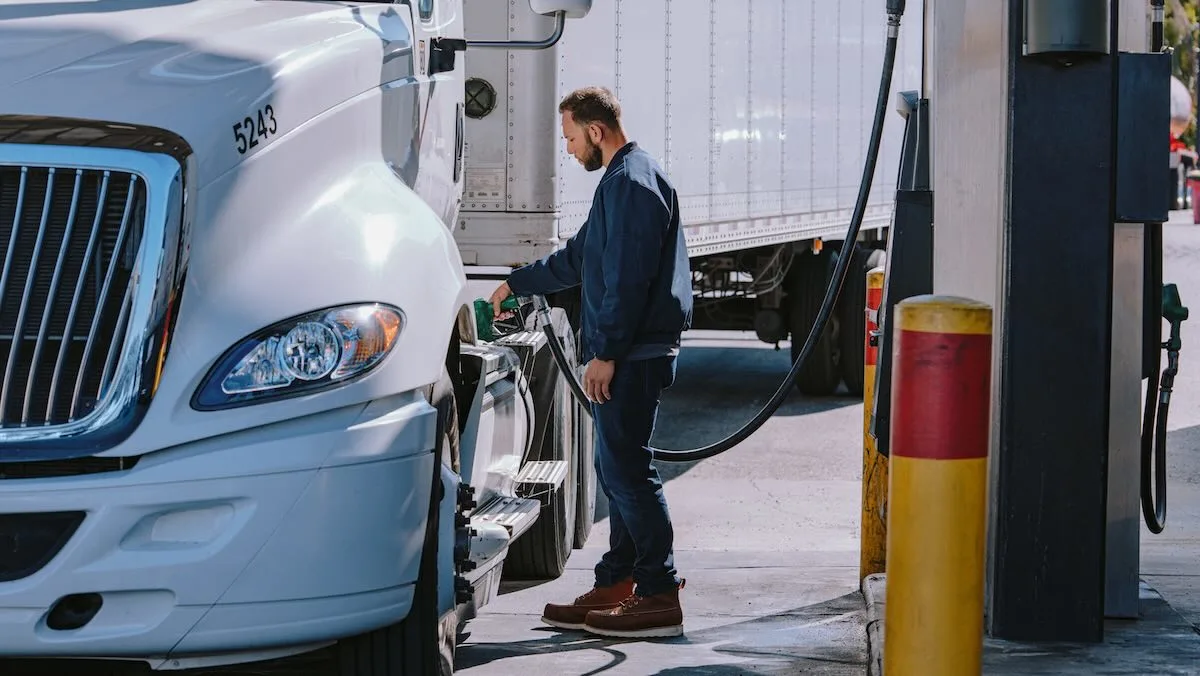
Beyond the pump: 7 Levers shippers can pull when fuel prices jump
Fuel prices are surging again.
Most shippers can’t simply “pass it through” anymore—so the question becomes: how do you structurally use less fuel per unit shipped, and protect yourself from overpaying when the market is volatile?
As an integrated logistics partner, Uber Freight connects data, capacity, and execution across our network — allowing us to identify better options as conditions change.
Here are some levers we recommend to customers at Uber Freight:
1. Shift the right lanes to intermodal
With flexible container options, stable pricing, and real-time visibility, shippers can leverage intermodal capacity to reduce costs, cut emissions, and streamline operations, without sacrificing control.
Convert highway miles to rail where service windows allow.
Start with stable O/D pairs and recurring volume, not edge cases.
Use TM + Capacity to decide lane by lane where intermodal offsets fuel without breaking OTIF.
2. Separate fuel from linehaul and enforce a fuel matrix
When fuel and linehaul are blended, it’s hard to see what you’re really paying—or if you’re being taken advantage of.
Separate base linehaul from fuel on every lane.
Govern fuel with a clear, published surcharge matrix tied to an external index.
Audit invoices against that matrix so you’re paying for real fuel movement, not opportunistic markups.
Many large enterprise shippers already have this locked in; but for mid‑market shippers and highly fragmented networks, putting this structure in place is often the fastest way to stop silent fuel leakage.
3. Increase trailer utilization (fewer half‑empty loads)
Rising fuel magnifies the cost of shipping “air.”
Tighten order cut‑offs and add a bit of lead time so you can build fuller trailers.
Expand multi‑stop and pooling strategies to combine freight by region or customer.
Use network visibility to spot chronic low‑fill lanes and attack them explicitly.
4. Design for consolidation, not just speed
Not every shipment needs to move on the fastest possible clock.
Where service commitments allow, redesign flows so you can batch orders and fill trailers.
Offer internal “service tiers” so commercial teams see where extra lead time funds better utilization and lower fuel burn.
Align with customer service or planning teams to communicate the situation and coordinate order merging earlier in the process.
5. Engineer out empty and waste miles
High fuel makes every reposition and detour more expensive.
Use routing and tour building to reduce deadhead and out‑of‑route miles.
Lean on marketplace capacity and dedicated / power‑only programs that keep assets moving in dense corridors instead of bouncing between one‑off lanes.
6. Evaluate low‑emissions and EV options where they fit
In certain regions and networks, EVs can hedge both cost and sustainability pressure.
Start with repeatable, shorter‑haul routes where charging is reliable and dwell can double as charge time.
Model TCO with fuel, incentives, and maintenance—don’t treat it as a side project.
7. Use data to continuously rebalance the mix
Fuel markets move. Your mode mix and utilization strategy should, too.
Watch fuel per unit moved, not just absolute fuel surcharges.
Let your transportation management model surface when a lane has “graduated” into intermodal or fuller‑trailer territory—and when it needs to move back.
Rising fuel costs hurt most when the network is rigid and pricing is opaque.
At Uber Freight, our job as a strategic logistics partner is to help shippers redesign their networks around these levers—using intermodal where it makes sense, filling trailers more intelligently, cutting waste miles, enforcing a fair fuel matrix, and exploring EV where it’s ready—so you burn less fuel for every order you ship, and only pay for the fuel you actually use.
To learn more about optimizing your network, connect with an expert.