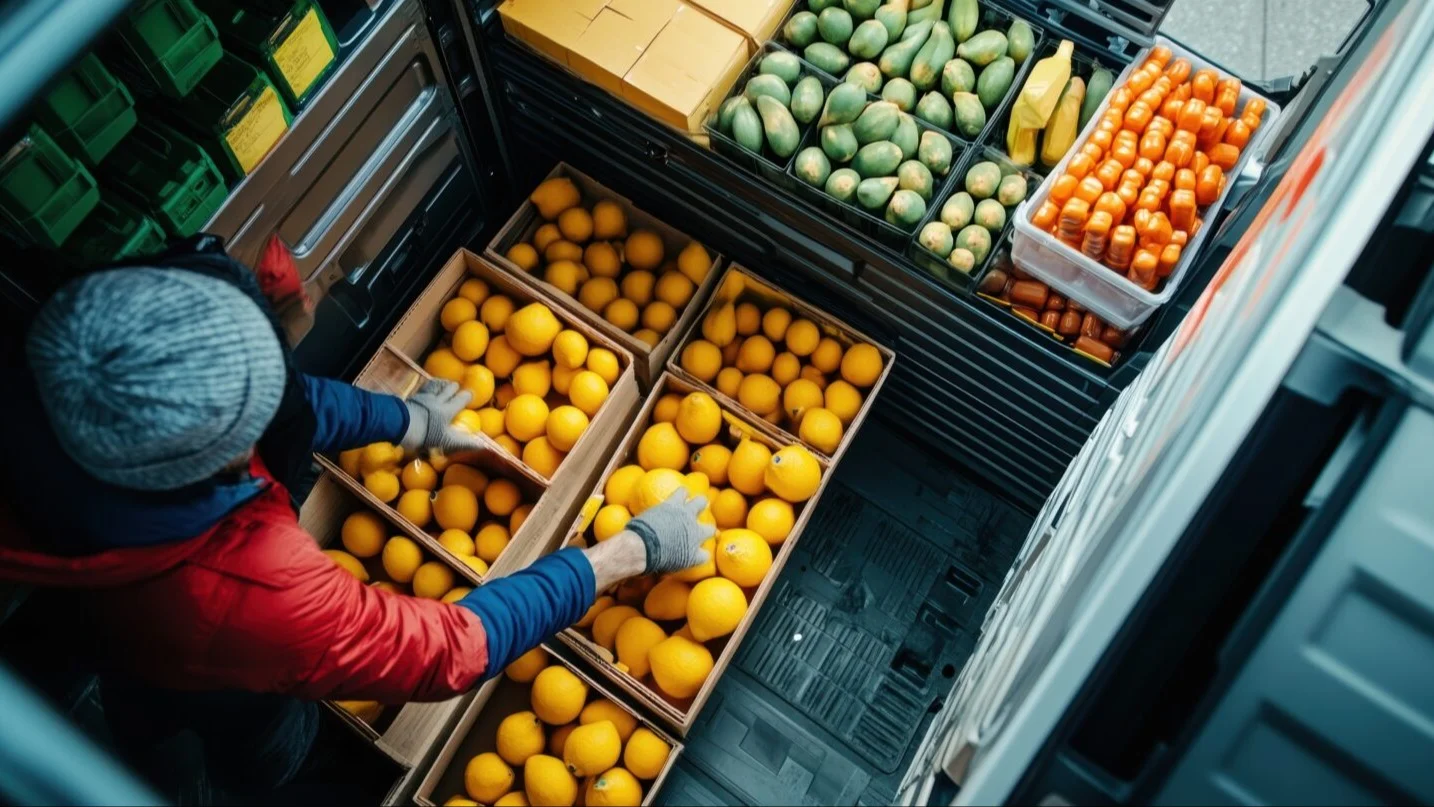
Every year, shippers expect produce season to follow a familiar cycle: starting in March, volumes steadily build before reaching a summer peak in July and then gradually taper off through October. But this year, produce season intensity started early—and it’s on track to be the hardest season since 2021.
Multiple market forces are converging to make this season a challenging one. Capacity is tightening faster than usual. Fuel prices, rates, and cross-border volumes are hitting record-level highs. Every produce season comes with pressure points—but now they’re all hitting at once.
For produce shippers, the stakes are higher than in most other freight classes as they rely on particularly tight operations: fresh produce comes in from the field, gets cooled, and must be loaded quickly. Any lapse in temperature control, visibility, or scheduling can cause spoilage. Current market conditions are prime for delays and coverage gaps that translate into risk. And market tightness leaves little wiggle room for shipper margins. Teams that act now will be better positioned to navigate increasing pressures throughout the rest of the season.
Tightening capacity and climbing rates
From March to April of this year, Fresno, CA, reefer tender rejection rates jumped from 4% to 14% in less than a month. Spot rates on the Fresno-to-Chicago lane rose to their highest level (43%) since 2022. Produce season had arrived—with unusual intensity. Now, it’s rolling out across the rest of the country.
As volumes build nationally, spot rates are rising beyond typical seasonal tightening. The conditions underneath this season are compounding in a way that's different from recent years—each pressure point feeding the next:
Rising fuel costs. The national average diesel hit $5.64 per gallon in mid-May, up from $3.72 in February, while April alone saw an 11.2% month-over-month surge.
Increasing tender rejections. Contracted load rejections are continuing to rise despite only moderate demand—signals that are typically associated with peak produce season rather than its early stages.
Switching equipment. As reefer demand peaks, carriers running dry van are switching equipment to chase higher produce rates, creating a capacity vacuum for dry van shippers on the same corridors.
Increasing rates: Spot rates are already running above contract rates. Fresno-to-Chicago reefer spot rates were up 43% in one month alone, the highest since 2022. The USDA-reported produce freight rates from central California to Chicago are also up 25% in recent months.
For most freight, these pressures mean higher costs and slower service. For produce, they mean something more immediate: temperature-sensitive cargo sitting longer, delivery windows compressing, and spoilage risk climbing with every delay.
A cross-border surge
Mexico has become a critical part of U.S. produce supply chains. But as produce shippers become more dependent on cross-border lanes, it adds market pressure, especially as volume grows in an already tight market.
This year, Laredo saw one of its heaviest produce seasons on record, with both import and export volumes increasing. In March, citrus, fruit, and nut volumes were all up over 36% year-over-year, while overall exports through Laredo increased 8%. For cross-border shippers, this volume translates into tighter equipment and driver availability and less timing flexibility.
Moreover, spot rates on Mexico-U.S. long-haul lanes have increased 8-15%, including fuel, since mid-February. Unlike domestic lanes, where some lanes may ease after peak season, cross-border rates are expected to remain elevated even after seasonal pressure subsides—mainly due to structural factors like B1 driver restrictions and limited border crossing capacity.
What shippers should do now
As the market and harvests shift, shippers need to be ready to adapt quickly. Success depends on the ability to anticipate changes, maintain real-time visibility across networks, and scale capacity precisely when and where it’s needed. This agility helps prevent disruptions and ensures that fresh freight keeps moving smoothly, no matter how the season evolves.
1. Secure reefer trucks early
With reefer rejection rates climbing, cross-border volumes surging, and transportation costs increasing, securing reefer capacity early reduces service disruptions and limits exposure to the spot market. Uber Freight’s large, reliable reefer network and technology-enabled capacity planning ensure shippers have the equipment they need, exactly when they need it.
2. Tender 4-5 days out on cross-border lanes
Cross-border lanes require additional coordination and planning. Providing tenders four to five days out gives carriers more time to secure equipment and capacity, especially as driver shortages increase due to regulatory changes.
3. Audit contracted carrier commitments lane-by-lane
Review routing guide performance and carrier commitments across key lanes before peak season begins. With rates and tender rejections increasing, shippers should identify any risks or coverage gaps before they impact peak-season operations.
4. Plan dedicated fleets 30 to 60 days out
Peak produce season requires more capacity than usual. Work closely with partners to model volume spikes and align on fleet capacity requirements at least 30 to 60 days in advance. Uber Freight’s extensive carrier network and flexible capacity solutions help shippers quickly adapt to seasonal surges without sacrificing service quality.
5. Prioritize communication and real-time tracking
Produce season demands clear, constant communication. Uber Freight’s Transportation Management System (TMS) and tracking tools provide shippers with real-time visibility and updates on truck location, temperature, and potential disruptions, empowering faster, data-driven decisions that safeguard cargo.
Partner for the long haul
The most resilient supply chains are built on strategic, year-round partnerships. With 1M+ annual reefer loads, Uber Freight manages temperature-controlled capacity through a carrier network built for consistency and compliance.
By combining deep produce expertise with robust digital tools and an extensive carrier network, Uber Freight helps shippers navigate the summer rush while strengthening operations year-round.
Connect with an expert today.