Why leading shippers are tapping into network scale to cut transportation costs and improve service
Logistics teams are always on the lookout for opportunities to optimize. They revise routing guides, renegotiate carrier contracts, and adjust shipment schedules. But these decisions are typically based on information from their own operations. While this can yield some improvement, they lack the context of broader network dynamics.
The carriers they work with, on the other hand, price and plan based on the combined freight flow they see across thousands of lanes. Shippers working solely from their own data are reacting to moves that carriers saw coming.
Logistics leaders can take a page from the carrier playbook, operating with network-level, multi-shipper visibility rather than in isolation. Tapping into multi-shipper networks through a managed transportation provider like Uber Freight can afford shippers the same flexibility and pricing leverage that carriers have long relied on.
Uber Freight brings scale and forward-looking intelligence that most shippers can't build on their own. With learnings synthesized across hundreds of shipper networks, we surface what's working across lanes, modes, and market conditions to provide the kind of intelligence that only comes from seeing the complete picture.
What is a multi-shipper network?
A multi-shipper network is an operating model in which freight from multiple shippers is aggregated within a shared system and optimized collectively.
When freight is aggregated, density increases and lane-level patterns become visible. Configurations that wouldn’t be viable within a single network begin to surface. As decisions are continuously refined using cross-shipper data, participating shippers gain stronger leverage on key lanes and greater flexibility when market conditions shift.
Enterprise shippers have effectively operated under this model for years due to their scale and freight volumes. Larger shippers typically run structured RFP cycles, blending brokers and carriers strategically to tap into network-level pricing and capacity. But even sophisticated programs have limits. Freight market conditions shift frequently, which means routing guides can go sideways fast. When carriers and brokers start handing loads back, teams are pulled into a cycle of reactive mini-bid activity that's costly and hard to sustain.
Today, the accessibility of technology has made it possible for shippers of any size to coordinate freight using multi-shipper intelligence through partnerships with large logistics networks.
Design better lanes with multi-shipper density
Multi-shipper networks increase lane density by combining compatible freight from multiple shippers moving through the same corridors and time windows. An individual lane often represents too little volume to influence how carriers price their services. If a shipper only moves a handful of loads per week on a given lane, that volume may not justify dedicated capacity or preferred pricing from a carrier’s perspective.
Density changes that by revealing repeatable patterns across similar freight and operating conditions. If multiple CPG shippers are moving complementary freight on high-traffic corridors like Chicago to Atlanta or Los Angeles to Chicago, aggregated data can reveal consistent weekly patterns that support stable round-trip configurations. That stability reduces empty miles and repositioning for carriers, making the lanes more attractive and strengthening shippers’ leverage in rate negotiations.
The same logic applies to inbound networks. Retailers and original equipment manufacturers (OEMs) often have multiple suppliers concentrated in the same region, each shipping on separate trucks several times per week. By aggregating that inbound freight within a shared network, it becomes possible to redesign the program entirely. Uber Freight restructured one retailer's network from 20 trucks per week down to 15, while increasing inbound supplier delivery frequency from 2–3 times per week up to 5. The restructure lowered transportation cost and inventory carrying cost, and cut expedites on freight that missed the previous day's cutoff.
Data from similar shippers within the same network also helps with performance indexing. A retailer with an 85% on-time performance rate may struggle to understand whether the issue stems from carrier mix or route design. Within a multi-shipper network, that retailer can benchmark against peers delivering similar products to the same destinations. If comparable retailers are consistently achieving higher performance, the network can identify differences in mode choice or carrier mix and recommend targeted adjustments.
Access a wider range of capacity options
Multi-shipper networks also expand the range of viable capacity configurations. Two or more shippers with compatible freight can co-load and share capacity, lowering costs and improving equipment utilization.
Consider two consumer products: soup and bottled water. Soup demand peaks in winter, while bottled water peaks in summer. Because these products are similar in weight and dimensions, their producers could negotiate a year-round arrangement with the same carrier. Instead of each shipper paying a premium during peak months, the network can smooth demand across seasons, offering carriers more predictable volume and potentially securing more stable pricing for the shippers.
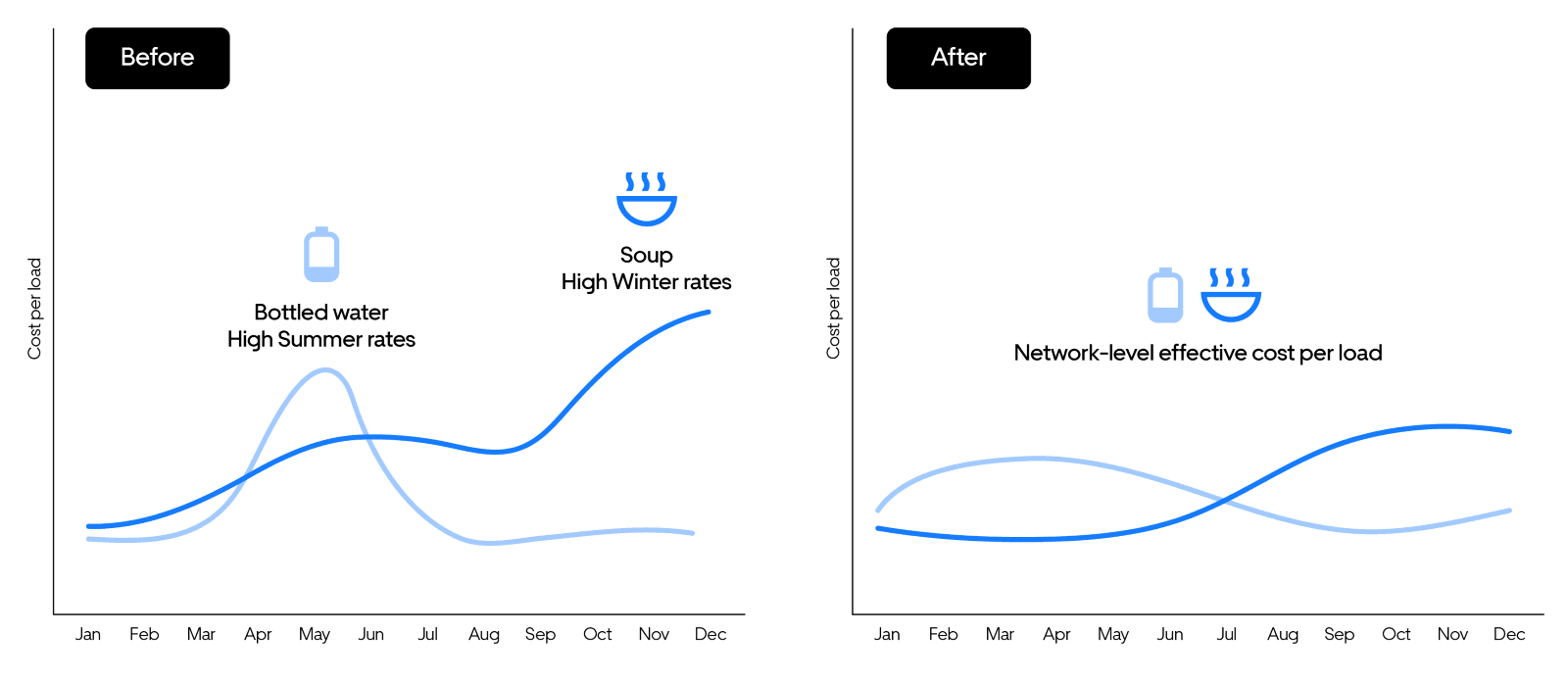
These configurations are already active in the market. Large enterprise shippers are running their own pool networks, and many CPG shippers are moving freight through retail consolidators. But these programs tend to exist in silos, fragmented across operators with limited visibility into one another. Uber Freight’s single operating model provides visibility across pools, consolidators, and multi-shipper programs simultaneously. That aggregated view is what makes it possible to match freight across programs and expand capacity options to reduce costs.
Get ahead of market shifts
In a tight market, rate and carrier optionality become even more valuable. When spot rates rise above contracted rates, tender rejections increase, and budgets creep up on lower-volume lanes where exposure to the spot market is already high.
Multi-shipper networks help mitigate that exposure. For shippers who use them well, the advantage goes beyond cost. When capacity tightens and competitors are scrambling for trucks, network-scale shippers are still moving freight. Aggregated data can identify market shifts earlier than lagging indicators like quarterly reports. By analyzing patterns across multiple customer segments and lanes, the network can detect rising rejection rates or tightening capacity in specific corridors before the impact becomes widespread.
Scale improves execution during disruption. When a winter storm hits, centralized procurement teams can run cross-shipper spot sourcing efforts. Using the combined buying power of the network, they can secure capacity at a more competitive rate than a single shipper negotiating in isolation.
Put network-scale intelligence to work through partnership
The more freight a network can see, the more capable it becomes. As lane patterns accumulate and disruptions are absorbed, decisions improve. That advantage shows up in more predictable transportation budgets and increased flexibility.
Accessing this kind of network requires both technology and coordination. A managed transportation partner uses network-scale intelligence to advocate for the shipper and translate signals from technology into action. For many shippers, the most practical way to access that partnership is through a provider that operates at scale.
Uber Freight is a multi‑shipper network of networks capable of seeing patterns across distributed supply chains. Our managed transportation teams use that visibility to tune routing guides, capacity programs, and execution in our customers’ networks. With our single transportation management and capacity operating model, better intelligence shows up as fewer fire drills, stronger cost position, and a clearer resilience story.
Uber Freight’s network includes 125,000+ truckload carriers and strong intermodal relationships. Trusted by 1 in 3 Fortune 500 shippers, our managed transportation model has helped customers drive more than $1B in savings and deliver an average 3x ROI year over year.
Looking to uplevel your transportation management in 2026? Our teams have the resources you need: Connect with an Uber Freight representative today.