How a national discount grocer eliminates freight theft and cuts costs with Uber Freight Market Access
Company snapshot

Profile
Industry: Food and beverage
Size: 450 stores; 1,000+ employees
Location: California

Overview
A grocer with over 400 locations across the U.S., specializing in discounted, overstocked, and closeout products from various retailers.
Opportunity
A complex network creates cost and risk challenges
As a fast-growing discount retailer, a national grocer builds its business on an opportunistic purchasing model—buying excess and closeout inventory from suppliers across the country and moving it quickly through its network. But while this approach increases margins, it also adds complexity.
By late 2023, the grocer managed nearly 20,000 lanes annually. Both the volume and frequency of these lanes were highly unpredictable, with many running only once or twice a year. This unpredictability made it difficult to proactively secure reliable carrier capacity or standardized processes. Maintaining service levels and keeping shelves stocked often meant reactive decisions and reliance on the spot market, which increased costs.
At the same time, the company was experiencing an uptick in cargo theft. Each incident directly impacted the company’s bottom line, increasing risk and cost pressures in an already cost-sensitive industry. With limited internal bandwidth and manual processes, the retailer turned to Uber Freight to better manage cost, complexity, and risk.
Solution
Flexible capacity with a reliable network
Uber Freight began by taking over management of the retailer’s inbound transportation, working closely with the company to understand how the network operated. Early on, it became clear that traditional procurement strategies couldn’t effectively support the company’s existing network and lane structure.
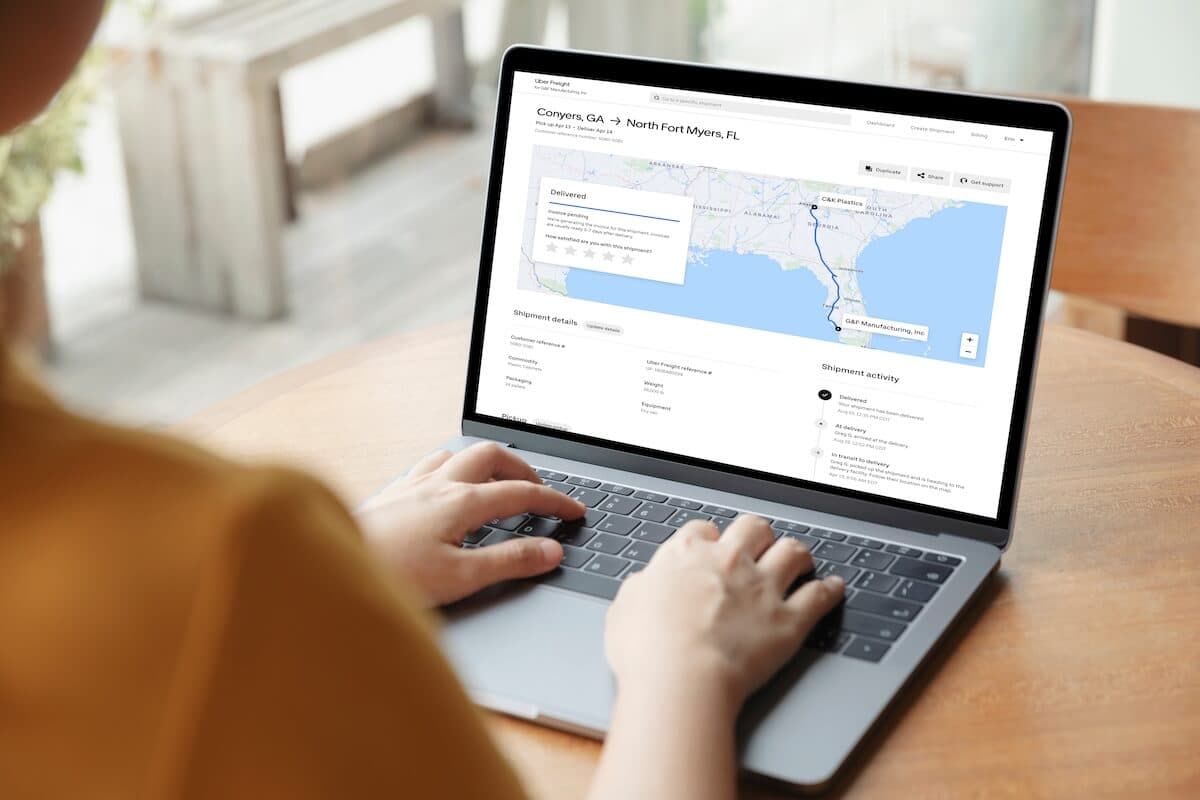
Stabilizing the network also required better technology and visibility. To provide real-time insights and more control over their supply chain, the team implemented Uber Freight’s Transportation Management System (TMS). The TMS created a foundation for more consistent planning and automated processes to speed up decision-making and improve day-to-day operations. Uber Freight’s team also identified backhaul opportunities for the company. Using Uber Freight’s reporting suite, the company can see real-time insights into vendor performance and inbound volume that would otherwise require manual analysis.
After reviewing the retailers network, Uber Freight determined that Market Access would help streamline costs and reduce risk. Instead of relying on fixed contracts or unpredictable spot sourcing, Market Access dynamically matches loads in real-time through Uber Freight’s diverse carrier network.
For the grocer, this created a reliable way to cover thousands of infrequent lanes on demand through the Uber Freight app—without additional manual effort or patchwork carrier sourcing. And because Uber Freight is a network of networks, the company has access to a wide variety of cost-effective, multimodal transportation. For example, with Uber Freight, the company converted eligible lanes to intermodal, which it previously hadn’t had access to.
Additionally, implementing Market Access significantly reduced risk. By leveraging Uber Freight’s vetted carrier network, the team ensures that every shipment is paired with a trusted, compliant carrier. As a result, cargo theft isn’t an issue for the company, potentially avoiding about $10,000 to $20,000 in average loss per truckload theft.
Market Access also introduced a transparent pricing model, ensuring more consistent and competitive rates. Now, the retailer has full visibility into carrier costs to reduce overspending.
As inbound operations stabilized, Uber Freight expanded the partnership. Recently, the team led a comprehensive RFP across both inbound and outbound freight. This gave the grocer more visibility and insight into its network and identified new cost-saving opportunities.
Through operational expertise and the right tools, Uber Freight has helped the grocer shift from reactive execution to an optimized, data-driven transportation strategy.
Results
Lower costs, zero theft, and a path to expansion
Today, the Uber Freight team manages the grocer’s inbound multimodal network to maintain strong service levels and healthy transportation spend despite complexity. Through the partnership with Uber Freight, the retailer has seen:
$3.5 million in annual transportation savings
Zero stolen loads since implementing Market Access in 2024
7.2% lower spot costs compared to the broader market
Full visibility and actionable insights into its inbound network
Extended cost savings for its outbound freight through RFP management
These results are the foundation for continued growth. What began as a solution to manage unpredictable freight and reduce risk has evolved into a true strategic partnership.
Looking ahead, the grocer is considering its options for outbound freight management based on Uber Freight’s ability to deliver measurable savings and uncover new optimization opportunities.
Uber Freight's network includes 125,000+ truckload carriers and strong intermodal relationships. Trusted by 1 in 3 Fortune 500 companies, Uber Freight improves cost position, service reliability, and network performance. Our managed transportation model has helped customers drive more than $1B in savings and deliver an average 3x ROI year over year.
Find out how Uber Freight’s managed transportation services can drive predictable outcomes in an unpredictable market. Connect with an expert today.