How a national protective products manufacturer cut delivery times by 60% with LTL consolidation
Company snapshot

Profile
Industry: Retail
Size: 1,000+ employees
Location: California

Overview
A global designer and manufacturer of protective products. For over 50 years, its mission has been to build and deliver world-class protective solutions.
Opportunity
Network consolidation creates operational challenges
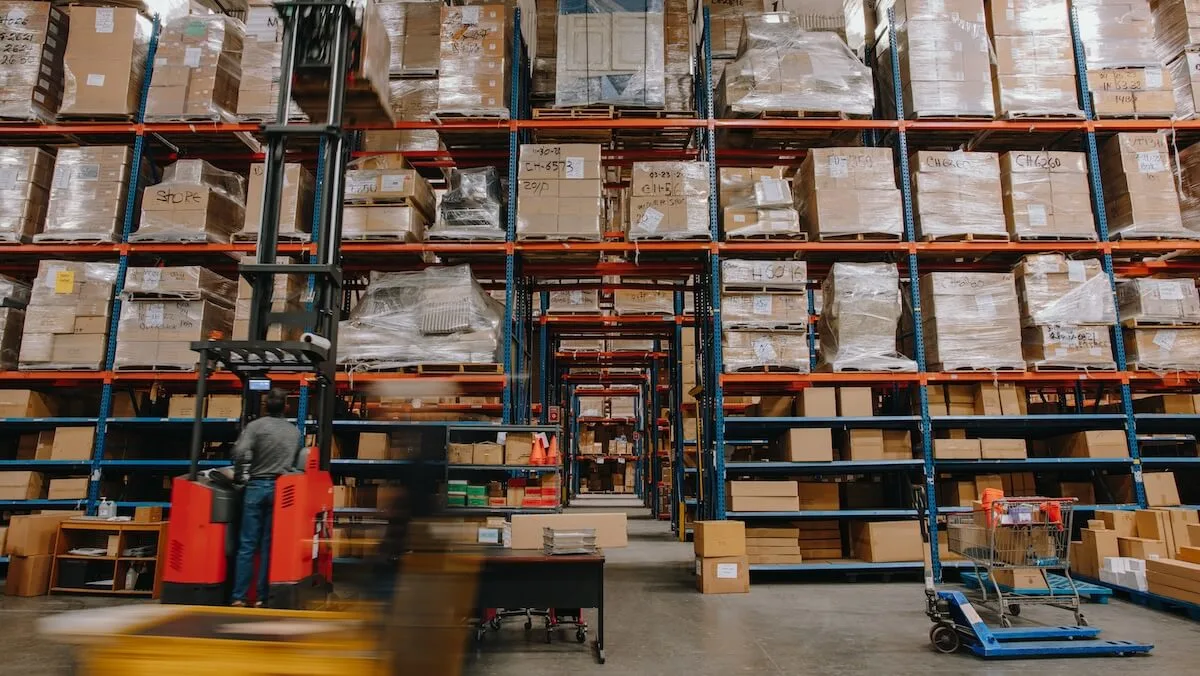
A manufacturer of durable protective equipment and specialty packaging originally built its network around two primary regional distribution centers for its U.S. network: the Midwest and the West Coast.
However, when the company decided to consolidate from two facilities to a single Midwest location, it introduced new operational challenges. While the consolidation simplified the network on paper, it replaced a regional fulfillment model with a long-haul, multi-leg flow. Now the company shipped products manufactured on the West Coast to the Midwest for storage.
When a West Coast customer—which makes up one third of their customer base—placed an order, the company had to route products back for fulfillment.
The impact on service levels was immediate. Orders that normally arrived in one to two days began taking a week or longer to reach West Coast customers. In some cases, transit times were even longer depending on order timing, carrier schedules, and limitations with traditional LTL service. And because a large portion of the company’s West Coast volume was time-sensitive retail and end-use customers, the risk of churn and lost accounts quickly became a reality.
The company needed a way to restore regional service performance without reopening a West Coast facility.
Solution
LTL consolidation and cross-dock optimization with OptiPro
As an existing managed transportation partner that actively used Uber Freight’s TMS, the Uber Freight team saw an opportunity to expand the partnership and help the company redesign its West Coast distribution strategy.
According to the logistics director: “Uber Freight didn’t treat it as a transaction. They looked past the initial hurdles to be a long‑term partner, really understanding our complexity and where they could add value to our supply chain.”
To do this, Uber Freight implemented its OptiPro program. OptiPro is a shipment collaboration program that works within Uber Freight’s network. With it, shippers can create multi-stop truckload shipments and easily consolidate LTL freight.
Rather than moving individual LTL shipments from the Midwest to West Coast customers, the company’s dedicated Uber Freight team worked to consolidate shipments into full truckload based on a structured shipping cadence of Monday, Wednesday, and Friday. From there, a West Coast cross-dock partner received the loads for regional distribution.
By replacing fragmented, multi-day LTL transit with a more predictable model, the company could maintain service levels without reopening a West Coast facility. The change also enabled next-day delivery across key Western markets like California, Nevada, Arizona, and Washington.
The program also helped maintain an LTL pricing structure while improving linehaul efficiency. As volume patterns changed, Uber Freight adjusted the scheduling frequency to meet demand, keeping operations cost-effective and scalable.
The logistics director added, “With Uber Freight, we have full visibility of our supply chain. We can almost be surgical in how we shape our footprint by knowing in detail what lane, what customer, what direction we’re going, and how we can do better.”
Results
Restored service levels and meaningful cost savings
Expanding the partnership to integrate OptiPro delivered measurable results for both service and cost. By shifting away from traditional LTL, the company initially achieved up to 30% in cost savings. As it prioritized faster transit times through additional network enhancements, those savings settled at approximately 10% savings compared to traditional LTL.
More importantly, the company could retain at-risk West Coast customers and meet customer expectations. Transit time was cut by 60%, with average order-to-delivery time reduced from eight days to three.
“We’re at 98% on‑time delivery to our customers with Uber Freight, which is a phenomenal success we’ve achieved over the years of our partnership.”
The logistics director sees this as phenomenal success: “We’re at 98% on‑time delivery to our customers with Uber Freight, which is a phenomenal success we’ve achieved over the years of our partnership.”
Together, these improvements enable the company to balance cost, speed, and service without reopening a West Coast facility. As the company’s broader network evolves and strategies shift, the Uber Freight team remains a true partner, continuing to provide dedicated service to support ongoing optimization.